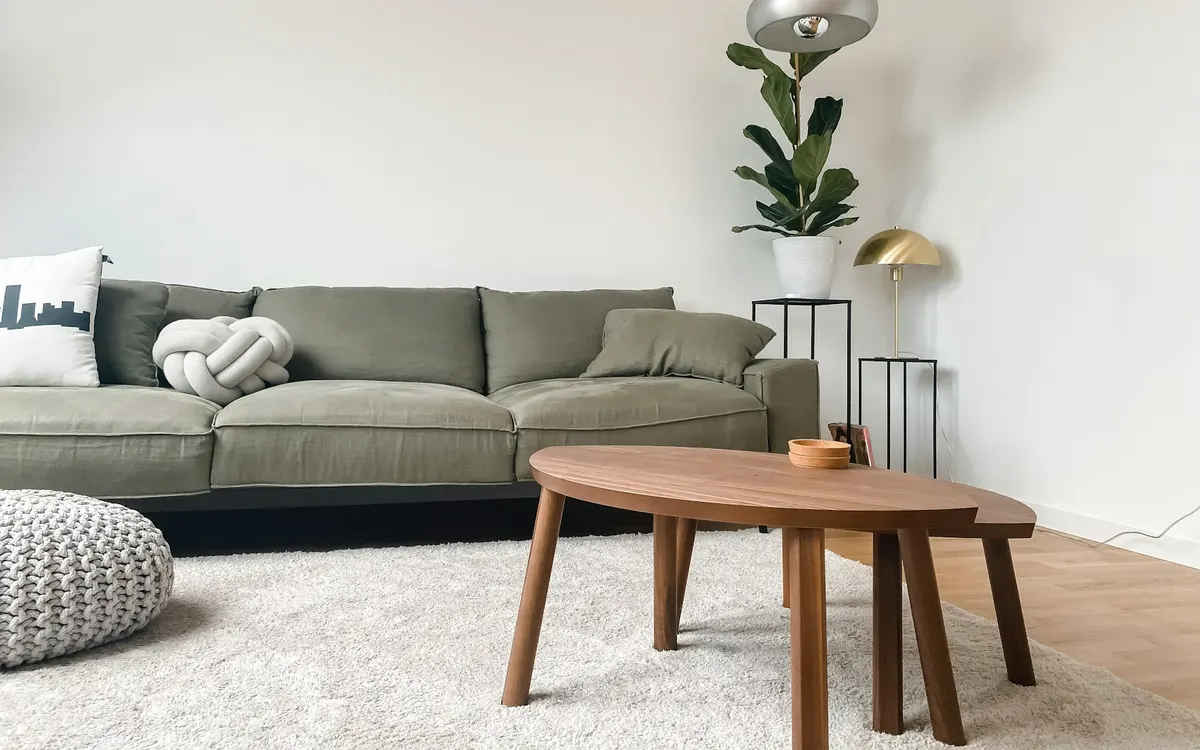
In a genuinely small home the binding constraint is simple: every piece of storage you add takes floor area away from the room. That one fact reorders the usual advice. Use the volumes that cost no floor first — above head height, the backs of doors, the inside of cupboard doors, under the bed — then make anything that does take floor do two jobs properly, and accept that past a point the honest answer is to own less rather than store more.
Storage costs floor area, which is why most advice fails
Almost every list of storage ideas is written as though space were free. In a one-bedroom flat or a small terraced house it is not. A 40 cm deep cabinet along a 2 m wall removes most of a square metre from a room that may only have twelve — permanently, while the clutter it was bought to hide was temporary.
So run every idea through one test: does this take floor area, and what does the room lose? A shelf at 1.8 m takes none. A hook on a door takes none. A chest of drawers takes a metre of wall plus the standing room to open it.
The second test is circulation. Measure the routes you use daily — door to sofa, bed to wardrobe, sink to hob — and treat them as fixed. A home feels small when the routes are tight, not when the floor area is low.
The volumes people forget
Most small homes hold several cubic metres of unused space that costs no floor area. Look here before buying any furniture.
| Volume | What it suits | Watch out |
|---|---|---|
| Wall above head height | Light, occasional categories in boxes | Fixings must suit the wall; nothing heavy |
| Back of a door | Shoes, sprays, wrapping, accessories | Over-door racks stop some doors closing |
| Inside a cupboard door | Lids, foil, brushes, hair tools, cloths | The rack must clear the shelves when shut |
| Under the bed | One named category in flat boxes on wheels | Needs airflow; measure the frame clearance |
| Above the wardrobe | Suitcases, off-season bedding | Only what you can lift down safely |
| Stair void | Hoover, coats, shoes, boxes | Meters and the stopcock must stay reachable |
| Window reveal | Narrow shelves, a slim rail | Never block a window you might escape through |
The under-stairs void deserves its own attention, because in UK terraced and semi-detached houses it is usually the largest unused volume in the home: under stairs storage ideas. What goes in the high boxes is covered in storage boxes.
Going vertical, and where it stops working
Vertical storage is the standard advice, and right, with three limits.
Reach. Anything above comfortable overhead reach is storage you will not use for daily items and should not use for heavy ones. Put light, infrequent, boxed categories up there and keep hip-to-eye level for what you touch daily. Getting this backwards is the commonest failure: people put daily things high because the space was empty, then stop using them.
The wall. A shelf is only as strong as its fixing, and British homes mix solid masonry, plasterboard on studs, dot-and-dab and lath and plaster, often in one room: see shelving ideas. If you rent, or cannot identify the wall, a freestanding tall unit anchored against tipping carries more weight with less risk.
The eye. Storage on every wall makes a small room read as a cupboard, which is why one tall run on one wall beats four short runs on four. Leave a wall empty on purpose.
Dual-purpose furniture passes two tests, or it fails
A bed with drawers, a lift-top coffee table, a storage bench, a footstool that opens — these save floor area, but only when both functions work.
Test one: is it still good at its main job? A bed must be comfortable, a bench a decent seat, a table the right height. A piece that stores well and sits badly is no saving.
Test two: can you open it where it actually stands? Draw the open position on the floor with masking tape before ordering. Divan drawers need clearance a small bedroom may not have, and an ottoman bed cannot be raised if bedside tables block it. This is the check people skip and regret; storage furniture and the storage bench guide cover it piece by piece.
Both tests point one way: hidden storage suits stable, infrequent categories and is poor for anything daily, because every lid is an extra movement.
A small budget, flat-pack and DIY
Most of the highest-value moves cost very little.
- Hooks, the only storage that adds capacity without adding depth.
- Shelf risers inside existing cupboards, which recover the unused band of air above the plates.
- A tension rod inside a cupboard for spray bottles.
- Racks inside cupboard doors, sized to clear the shelves when the door shuts.
- Flat lidded boxes on wheels under the bed, measured to the real frame clearance.
- Vacuum storage bags for bulky washable textiles: right for duvets and synthetics, wrong for down, wool or anything structured.
- One anchored modular unit doing the job of three small pieces: cube storage ideas.
Flat-pack is fine: its honest advantage is that you can afford to get the size right rather than the brand right. Measure the doorway diagonal and the stair turn before ordering anything large, because in older homes the piece that fits the room may not reach it.
Clothes: the category small homes lose to
Clothes break small homes, because they grow faster than anything else and need hanging height, folding space and a laundry cycle at once. Three moves do most of the work. Split the wardrobe by season and store the off-season half compressed and labelled, so the rail only holds what is wearable now. Convert the dead height under short hanging garments into drawers or boxes, usually the largest single waste in the room. And reduce the number of items rather than the volume of each, which is what a capsule wardrobe is for.
The wardrobe itself belongs in wardrobe organisation, the room's routines in bedroom organisation. In a small bedroom the storage question narrows to three volumes, in this order: under the bed, above the wardrobe, the wall above the headboard.
Room by room
- Kitchen. Cupboard door interiors, risers above the plates, a hard cap on worktop appliances: kitchen organisation.
- Bathroom. Work around the pipework, keep only what tolerates damp: under sink storage, bathroom storage ideas.
- Hallway. Hooks and one shallow shelf, never a deep unit: hallway storage ideas.
- Living room. One well-sized piece, not several small ones: living room storage ideas.
- Bikes. They beat every storage idea on volume: bike storage ideas.
What you must never block
Small-space storage goes wrong when it borrows from safety.
Do not obstruct the way out. London Fire Brigade states that in blocks of flats the communal corridors and staircases must be kept free from clutter such as pushchairs, e-bikes and rubbish, because these can block your escape route, add fuel to a fire and delay firefighting. The same logic applies inside a small flat: the hallway is the route out, not an annexe.
Do not block a window you might need. The Brigade's escape planning treats a window as a second route if the first is blocked, and advises keeping door and window keys where everyone you live with can find them. A chest of drawers under a bedroom window is fine only if you can still open it and get out.
Do not seal storage against a cold external wall. Government guidance on damp and mould stresses the importance of leaving a gap between furniture and external walls, and notes that in an inadequately ventilated home the moisture in the air cannot escape and is more likely to condense. Store textiles clean and completely dry, and leave air around anything under a bed.
When the answer is to own less
There is a point at which more storage stops working: every cupboard is full, boxes contain boxes, and the last three purchases each solved the problem for a month. Past that, another container adds no capacity, only a place to postpone a decision.
The test is quick. If you cannot say what is in a container without opening it, and have not opened it this year, the contents are not storage but deferred sorting. Start with decluttering; if the difficulty is deciding rather than doing, the numeric methods in decluttering rules let you begin without negotiating with every object.
The January point, honestly
UK interest in small-space storage is extraordinarily seasonal, peaking in January at many times the annual average. That timing is understandable and slightly unhelpful: the impulse arrives as the decorations come down, exactly when the shops are full of storage. Do the free things first — measure the routes, empty the under-bed boxes, find out what the high shelf is holding — and only then spend.
Checklist
- Daily routes measured and fixed before any furniture is considered.
- Free volumes used first: above head height, door backs, cupboard doors, under the bed.
- Daily items at hip-to-eye level; light, occasional items high.
- Every dual-purpose piece tested for its main job and for opening where it stands.
- Shelving matched to the wall type and load, or freestanding and anchored.
- Nothing blocking the route out, a window, or a cold external wall.
- One wall deliberately left empty.
- The two fastest-growing categories, usually clothes and paper, each have a physical limit.
Once the volumes are used and the limits set, the next gain is in the rooms under most pressure: wardrobe organisation if clothes are the problem, kitchen organisation if the worktop is, and how to keep the house tidy for the routine that stops a small home refilling.
Sources and references
Frequently asked questions
Questions before you begin
What are the best storage ideas for small spaces?
Start with the volumes that cost no floor area: the wall above head height, the backs of doors, the inside of cupboard doors and the space under the bed. Only then consider furniture, and only if it does two jobs properly. Anything that takes floor area has to earn it against the room it removes.
How do I store things in a small bedroom?
Three volumes matter, in this order: under the bed in flat lidded boxes on wheels measured to the frame clearance, above the wardrobe for suitcases and off-season bedding, and the wall above the headboard for light boxed categories. Convert the dead height under short hanging clothes into drawers or boxes as well.
Is vertical storage always a good idea?
Not for everything. Height suits light, infrequent, boxed categories, and the band between hip and eye level should stay for things you use daily. Storage on every wall also makes a small room read as a cupboard, so one tall run on one wall usually beats four short runs on four walls.
How can I add storage on a small budget?
Hooks, shelf risers inside existing cupboards, tension rods, racks on the inside of cupboard doors and flat boxes under the bed cost very little and recover real volume. Measure the doorway diagonal and the stair turn before ordering anything large, because in older homes the piece that fits the room may not reach it.
Is multipurpose furniture worth it in a small home?
Only when both functions work. The piece must still be good at its main job — comfortable to sleep on, decent to sit on, the right height — and you must be able to open it where it actually stands. Draw the open position on the floor with masking tape before ordering.
Can I store things under the bed?
Yes, for one named, infrequent category in flat lidded boxes measured to the frame clearance. Keep the contents clean and completely dry and leave air around them, because moisture that cannot escape a poorly ventilated room condenses on cold surfaces.
What should I never block with storage in a small flat?
The route out, a window and a cold external wall. London Fire Brigade requires communal corridors and staircases in flats to stay free of clutter, treats a window as a second escape route if the first is blocked, and advises keeping window keys where everyone can find them. Government damp guidance advises leaving a gap between furniture and external walls.
When should I stop buying storage and declutter instead?
When every cupboard is full, the boxes contain boxes, and the last few purchases each solved the problem for about a month. If you cannot say what is in a container without opening it and have not opened it this year, that is deferred sorting, not storage.


