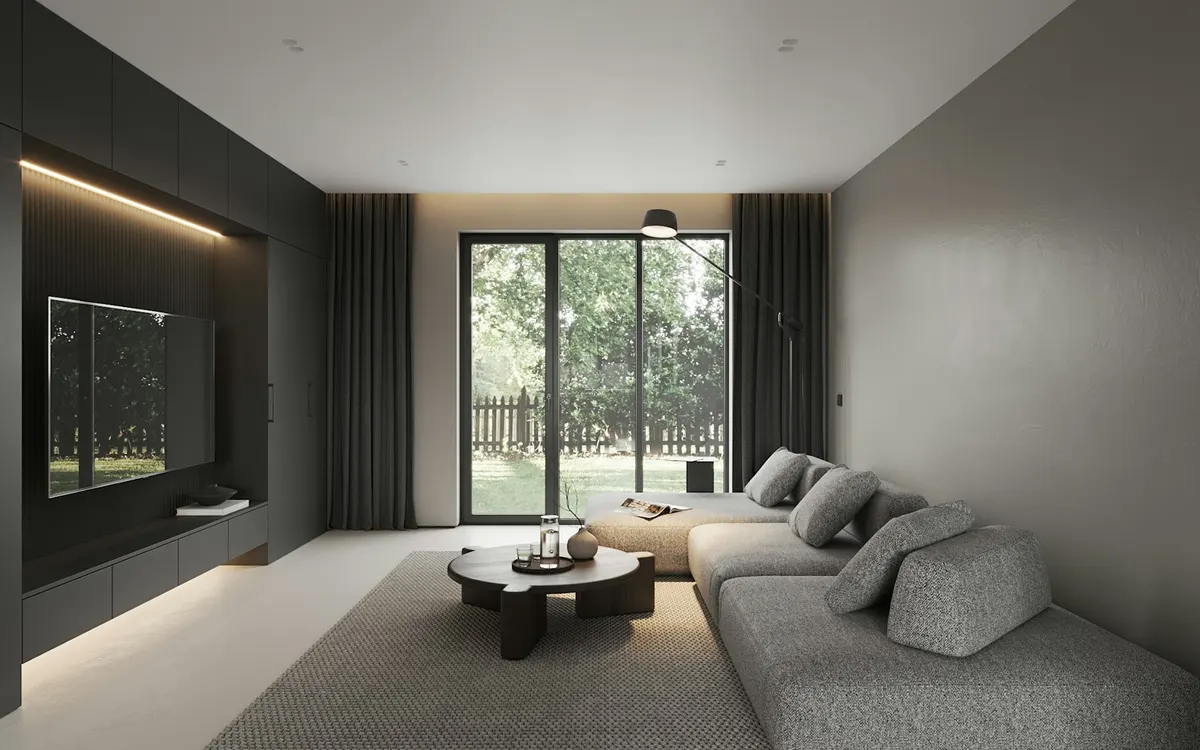
Living room storage has to be furniture, because this is the one room permanently on show and shared by everyone in the house. So the useful question is not where to hide things but which piece holds which category: a sideboard for the mixed adult categories a visitor should not have to look at, a media unit for the television and its cables, a lift-top ottoman or basket for throws and the toy rotation, and alcove joinery where the room's own shape gives you depth for free. Name the categories, measure the route through the room, then buy the piece.
What actually accumulates in a living room
Nearly every living room fills with the same six categories, and nearly all arrive because the room is shared.
- Media and cables. Television, console, controllers, remotes, chargers, and a bag of cables for devices that left the house years ago.
- Toys. Children play where the adults are, so toys migrate here whether or not there is a playroom.
- Paperwork. Post opened on the sofa, school letters, half-filled forms, unfinished magazines.
- Throws and blankets. Bulky, soft, used daily from October, homeless in most houses.
- Games and hobby kit. Board games, a jigsaw, knitting, a laptop living on a chair arm.
- Drinks and hosting things. Glasses, bottles, coasters, candles — used rarely, stored permanently.
Write your own six down before you look at any furniture, and reduce them first. Households buy a handsome piece and stay untidy because it was chosen for its looks and then asked to hold whatever turned up. Decluttering is the first step, and the cheapest.
Match the category to the piece
Each standard living room piece is good at something different. None is good at everything.
| Piece | Holds well | Access | Watch out |
|---|---|---|---|
| Sideboard | Paperwork, glassware, games, cables | Doors or drawers at waist height | The top becomes a dumping ground |
| Tall storage cabinet | Most volume per square metre of floor | Doors, upper shelves out of daily reach | Top-heavy, so it must be anchored |
| Media unit | Television, boxes, controllers, remotes | Open shelves and shallow drawers | Ventilation for anything that runs warm |
| Coffee table with storage | Remotes, coasters, one game, current reading | Lift-top or a shallow drawer | Hopeless for hourly items once loaded |
| Lift-top ottoman | Throws, blankets, cushions, a toy rotation | One lid, one movement | Soft contents need air; check the hinge |
| Open basket | Whatever moves in and out every day | Immediate, nothing to lift | Fills with anything unless given a job |
| Alcove joinery | Books, boxes, media, a little display | Whatever you specify | Rarely square; measure at three heights |
| Low bookcase or cube unit | Books, records, boxed categories | Open and readable | Anchor it, and load the bottom row |
Storage furniture as a category — ottoman beds, benches, chests — is covered in storage furniture.
Sideboards: the piece that does most of the work
A sideboard earns its popularity honestly: closed storage at working height, a usable top, and a footprint against one wall rather than mid-room. It is the right answer for categories you want present but invisible.
Size it against three measurements you take yourself. First, the deepest object going inside: a sideboard that must swallow dinner plates is a different piece from one holding paperwork and glasses, and buying the deep version by default costs floor area you cannot get back. Second, the route past it — load a laundry basket, walk the gap, and if you turn sideways the piece is too deep for that wall. Third, the way it opens: doors need swing clearance and a free hand, drawers can be pushed shut with a hip, and with a coffee table close by that decides whether the piece gets used.
Then choose doors or drawers by depth, not looks. A deep cupboard develops a lost back row within a month, because nothing at the back is visible from standing. Drawers show their contents from above, which is why they usually win for anything small and mixed. Where you do have deep cupboards, put boxes inside and pull the box out rather than reaching past things; storage boxes covers sizing them so they slide.
The television, the cables and the media pile
Television equipment is the one living room category with technical requirements rather than aesthetic ones. Anything that runs warm needs air around it, so a closed cabinet needs a ventilated back or an open bay, and a solid unit trapping heat behind glass is a poor home for a console. The unit itself is covered in storage furniture.
The cable problem is a decision problem. Unplug everything once, plug back only what you use, and put the rest in one labelled box with a date on it — if a year passes unopened, the contents are recycling. Label the cables you keep at the plug end.
Toys in a room that is not a playroom
The living room is not a playroom, and pretending otherwise produces the evening scramble. Keep one container here for an active rotation, sized so it is genuinely full when that rotation is in it, and return the rest to the child's own zone. A low open basket beats a lidded box, because a lid taxes every use.
The wider system — rotation, sizing, labels a child can read — belongs in toy storage ideas; here only the limit and the child's reach matter.
Throws, blankets and the ottoman question
Blankets are bulky, soft and used every evening in a British winter, which makes them the worst candidate for a deep cupboard and the best one for a lidded box or basket beside the sofa. A lift-top ottoman is the standard answer and a good one, provided the hinge and lid weight suit the household and the contents go in dry and get aired rather than compressed for six months. Lids, hinges and children are covered in the storage bench guide. Then cap the number: a household owning nine throws stores nine badly, where five would fit and get used.
Paperwork, games and drinks
Paperwork does not belong here, but it lands here, so give it a transit point rather than a home — one shallow tray, emptied weekly into the real system in home filing system. A tray with no scheduled emptying becomes an archive within a month. Board games want a shelf sized to their boxes and stored flat, because a stack you must dismantle gets played from once. Glasses that come out twice a year belong in the kitchen, not on a sideboard shelf.
Alcoves and the wall behind the sofa
Chimney-breast alcoves are the free depth most British living rooms already own, and fitted shelving, or a low cupboard with shelves above it, turns them into the best storage in the room. Alcoves are rarely square, so measure the width at three heights and expect to scribe the piece to the wall. Load, wall type and fixing decide whether that shelving is safe: see shelving ideas.
The wall behind the sofa is usually the wrong place for storage: anything hung there sits above someone's head, and a deep piece steals the route around the seating. Picture ledges are fine; a loaded bookcase is not.
The safety and damp checks people skip
Three checks matter more than any styling decision.
Anchor anything tall or top-heavy. RoSPA is explicit that furniture at risk of being pulled over should be secured to the wall, and warns that children have died or been seriously injured by heavy objects such as furniture and televisions being pushed or pulled over them. That covers tall cabinets, bookcases, cube units and the television, in rented homes too.
Leave a gap behind furniture on external walls. Government guidance on damp and mould in the home stresses the importance of leaving a gap between furniture and external walls, and notes that in an inadequately ventilated home the moisture in the air cannot escape and is more likely to condense. A sideboard pushed flat to a cold wall is a classic place to find mould in February.
Keep the way out usable. Do not let a new piece narrow the route to the door or stand in front of a window you might need. London Fire Brigade advises keeping door and window keys where everyone you live with can find them, and treating a window as a second route if the first is blocked.
What goes wrong
- Buying the media unit before decommissioning the dead devices, so it is full on day one.
- Choosing deep storage for daily items, so the front row becomes a wall and the back row is lost.
- Ringing the room with storage until the floor left is smaller than the furniture holding it.
- Treating an ottoman as where things go rather than where one named category lives.
- Buying a matching set of small units when one sideboard would hold the same volume.
A checklist before you buy
- The categories in your own room are written down and reduced.
- The deepest object going inside has been measured.
- The route past the piece has been walked with something in both hands.
- Doors, drawers and lids open with the coffee table where it actually lives.
- Daily categories are open or shallow; occasional ones sit behind doors.
- Tall and top-heavy pieces have an anchoring plan.
- Nothing sits flat to a cold external wall or in front of an escape window.
After the furniture, the gains come from the wall and the daily reset: shelving ideas for the alcoves, how to keep the house tidy for the five minutes that stop it silting up. If the room is genuinely tight, start with storage ideas for small spaces.
Sources and references
Frequently asked questions
Questions before you begin
What is the best storage for a living room?
A sideboard does the most work in most rooms, because it gives closed storage at waist height, a usable surface and a footprint against one wall. Beyond that, match the piece to the category: a media unit for the television, a lift-top ottoman or basket for throws and toys, and alcove shelving for books.
How deep should a living room sideboard be?
Deep enough for the deepest object going inside, and no deeper. Measure that object first, because a sideboard sized for dinner plates or a printer is much deeper than one holding paperwork and glasses, and the extra depth costs floor area permanently.
Should a sideboard have doors or drawers?
Drawers usually win for small mixed items, because you can see the whole contents from above and nothing gets lost at the back. Deep cupboards behind doors develop a lost back row within weeks unless you put pull-out boxes inside them.
How do I hide cables in the living room?
Treat it as a decision rather than a tidying job. Unplug everything, plug back only what you use, and put the rest in one labelled box with a date on it. Bundle and label the cables you keep at the plug end, and make sure anything that runs warm has air around it rather than sitting in a sealed cabinet.
Where should children’s toys go in the living room?
Keep one low, open container for an active rotation, sized so it is genuinely full when that rotation is in it, and return everything else to the child’s own zone. An open basket beats a lidded box, because a lid is an extra step on every use.
Do I need to anchor living room furniture to the wall?
Yes for anything tall or top-heavy, including bookcases, cube units, tall cabinets and the television. RoSPA advises that furniture at risk of being pulled over should be secured to the wall, and notes that children have been killed or seriously injured by furniture and televisions being pulled over them.
Can I put a sideboard against an external wall?
Yes, but leave a gap behind it. Government guidance on damp and mould stresses leaving a gap between furniture and external walls, because a poorly ventilated home cannot lose the moisture in the air and it condenses on the cold surface. A unit pushed flat to a cold wall is a common place to find mould.
How do I organise a small living room?
Use the alcoves before the walls, choose one well-sized piece rather than several small ones, and keep the route through the room fixed before adding anything. Daily categories go in open or shallow storage; occasional ones go behind doors.


