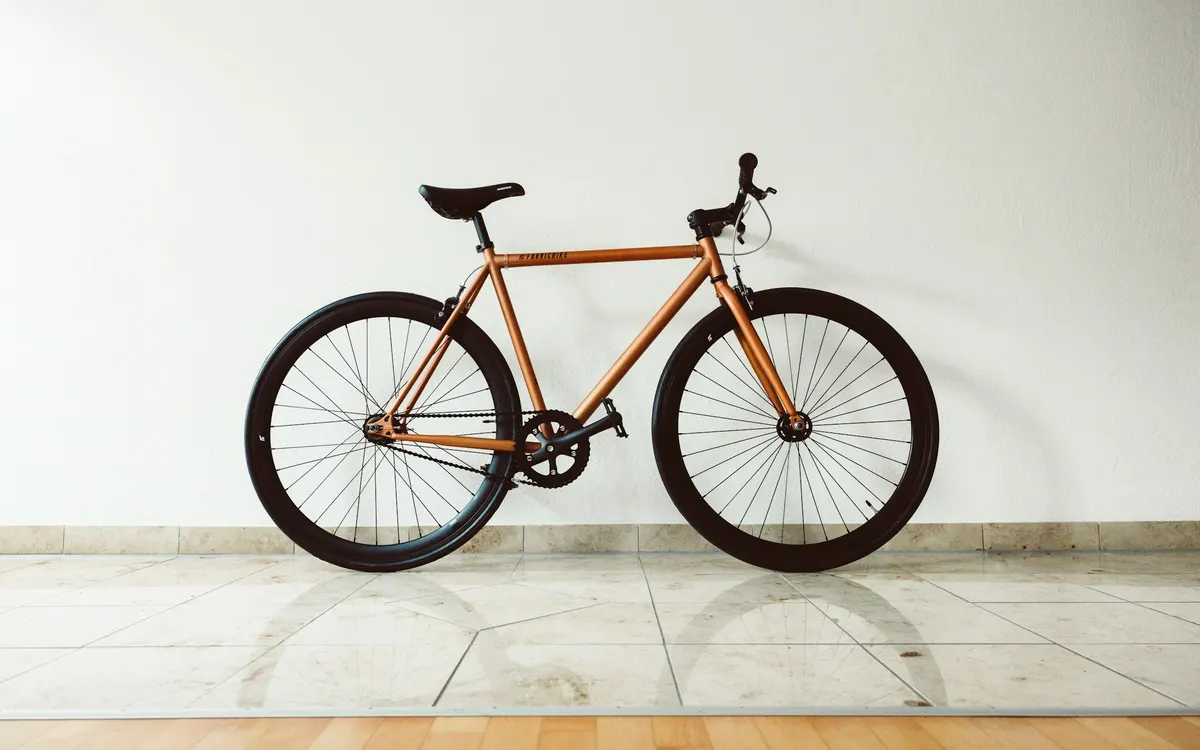
The right bike storage depends on three things: how often you ride, who lifts the bike and where the space is. Inside a flat or house, a vertical wall hook, a horizontal rack, a floor stand or a ceiling hoist keeps the bike off the floor and out of the route; outdoors, a shed, a bike locker or a cover with a ground anchor keeps it dry and locked; in a garage, wall racks and hoists free the floor. In every case the bike must stay out of communal corridors and stairwells, which fire services require to be kept clear, and e-bike batteries must be charged away from your exit and never overnight.
Start with the daily reality
A bike that takes three moves to get out ends up leaning in the hallway. Before choosing a mount, answer honestly: how many times a week you ride, whether you can lift the bike above shoulder height, whether children or older relatives share the space, and where the bike will drip after a wet ride. Then measure the bike itself, its length, handlebar width and tyre width, and the doors and corners it must pass through. Heavy e-bikes and cargo bikes rule out most hooks and hoists and push you towards floor stands and ground-level storage.
Indoor bike storage
Vertical wall hooks hang the bike by the front wheel and take the least floor space, but need a solid wall, a fixing that suits it, and a rider who can lift the bike. Horizontal wall racks hold the bike by the frame along a wall and suit heavier bikes and lower ceilings, at the cost of more wall. Floor stands need no drilling and suit renters, but take the most floor area. Ceiling hoists lift a bike overhead with a pulley and suit garages and tall hallways with light bikes and no small children underneath. A bike inside your own front door on a hook or a stand is the standard small-flat answer, and it fits alongside the rest of the entrance in hallway storage ideas and storage ideas for small spaces.
Under the stairs works in a tall, straight cupboard with a floor stand and enough door width, which is one of the options in under stairs storage ideas. Wherever the bike lives indoors, put a mat or tray underneath, wipe the tyres in winter and keep the wall behind a hook protected from the rear tyre.
| Option | Permanence | Security | Best for |
|---|---|---|---|
| Vertical wall hook | Drilled, medium | Low unless locked to a wall anchor | Small flats, light bikes, riders who can lift |
| Horizontal wall rack | Drilled, medium | Low unless locked | Heavier bikes, low ceilings, garages |
| Floor stand | None, freestanding | Low | Renters, quick daily access |
| Ceiling hoist | Drilled, medium | Low | Garages, tall halls, seasonal bikes |
| Under stairs cupboard | None to medium | Medium behind a closed door | Houses with a straight, tall cupboard |
| Bike shed or locker with ground anchor | Fixed, high | High with a rated lock | Gardens, front yards, daily commuters |
| Cover with ground anchor | Low | Medium; visible | Short-term, dry spells |
| Garage wall rack or hoist with anchor | Drilled, medium | High if the garage is locked and the bike anchored | Households with several bikes |
Flats, communal hallways and escape routes
A communal hallway is not storage. London Fire Brigade states that communal corridors and staircases must be kept free from clutter, including pushchairs, e-bikes and mobility scooters, because they can block the escape route, add fuel to a fire and delay firefighting. The same applies to landings, meter cupboards and the area behind the main entrance door. If your building has a bike store, use it; if not, the bike lives inside your flat or in a locker outside, and a conversation with the landlord or managing agent about a proper bike store is a reasonable request.
Inside the flat, the same logic continues on a smaller scale. Keep your own hallway passable, do not lean a bike against the front door, and keep chargers and batteries away from the route out.
Outdoor bike storage
Outdoor bike storage ranges from a cover to a full shed. A bike shed or metal locker on a solid base, locked and fitted with a ground anchor, is the most secure and the driest; a plastic or fabric cover keeps rain off but advertises the bike and gives no real security. Whatever the structure, the bike inside it should be locked to a ground anchor or a fixed wall anchor with a rated lock, because a shed padlock is often the weakest point. Position sheds away from a fence that gives a thief a hidden working space, and check that the roof drains away from the door.
Garage bike racks
A garage bike rack turns wall and ceiling into storage and keeps the floor for the car and the route to the door. Fix racks into brick or block, or into studs on a timber wall, at a height that suits the tallest rider in the household. Ceiling hoists suit bikes used seasonally. Lock the bikes to a ground or wall anchor even inside a locked garage, and keep them away from the door mechanism and any stored fuel. The rest of the space is covered in garage storage ideas.
Security: locks, ratings and registration
Sold Secure, the UK testing house for security products, grades pedal cycle locks Bronze, Silver, Gold and Diamond. Its own guidance recommends Gold for a high value bike or a high-risk area such as a big city or university town, and Diamond for very high value bikes in very high risk areas; Bronze is a deterrent for short stops in low-risk places. Police crime prevention advice adds the practical layer: keep a record of the frame number stamped under the bottom bracket, take a clear photograph, mark the bike and register it, use two different locks with at least one high quality D-lock, fit a ground anchor at home, and lock the bike at home even inside a garage or flat.
E-bike batteries: charging and storage
E-bike and e-scooter batteries are a fire risk when damaged, faulty or charged incorrectly, and the storage plan has to include them. London Fire Brigade advises charging on a hard, flat surface where heat can dissipate, using the charger supplied with the battery or one recommended by the manufacturer, allowing the battery to cool after a ride before charging, never leaving a battery charging unattended or while asleep, and storing and charging away from a main through-route or exit. A battery that has been dropped or damaged should not be used, and lithium batteries should never go in the household bin. Fit a smoke alarm in the area where you charge.
Renters and freestanding options
Tenants can avoid drilling with a floor stand, a tension pole rack braced between floor and ceiling, or a leaning wall rack. A ground anchor cannot usually be fitted without permission, so a heavy freestanding anchor or locking to a fixed structural element is the fallback. Ask before drilling, keep the bike inside your own front door, never in the shared corridor, and take the fixings with you when you move.
Quick checklist
- Riding frequency, lifting ability and route measured before buying a mount
- Bike never stored in a communal corridor, stairwell or landing
- Indoor mount suited to the wall, the bike weight and the tallest rider
- Outdoor shed or locker on a solid base with a ground anchor
- Lock rated Gold or Diamond by Sold Secure; two locks; frame number recorded and registered
- E-bike battery charged on a hard surface, away from the exit, never overnight, with the original charger
- Mat under the bike indoors; fixings checked each season
For households with more than one bike, the garage is usually where the system lives. Continue with garage storage ideas.
Sources and references
Frequently asked questions
Questions before you begin
How do I store a bike in a small flat?
Use a vertical wall hook or a freestanding floor stand inside your own front door, where the bike sits against a wall without blocking the route. Never leave it in a communal hallway or stairwell, which fire services require to stay clear.
Can I store my bike in a communal hallway?
No. Fire and rescue services state that communal corridors and staircases must be kept free from clutter, including bikes and e-bikes, because they block escape routes and add fuel to a fire. Keep the bike inside your flat or in an approved bike store.
What is the most secure outdoor bike storage?
A locked shed or metal bike locker fixed to a solid base, with the bike also locked to a ground anchor using a Sold Secure rated lock. Out of sight, double-locked and registered is the combination police advice points to.
Which bike lock rating should I look for?
Sold Secure grades pedal cycle locks Bronze, Silver, Gold and Diamond, with Gold and Diamond recommended for higher value bikes and higher risk areas such as big cities. Police advice is to use two different locks and to register the frame number.
Where should I charge an e-bike battery?
On a hard, flat surface away from your main through-route or exit, using the charger supplied or recommended by the manufacturer, and never unattended or while you sleep. Do not use a battery that has been dropped or damaged.
How can I store a bike without drilling as a renter?
Use a freestanding floor stand, a tension-pole rack braced between floor and ceiling or a leaning wall rack that does not need fixings. Check the tenancy agreement before drilling and keep the bike out of any shared corridor.


