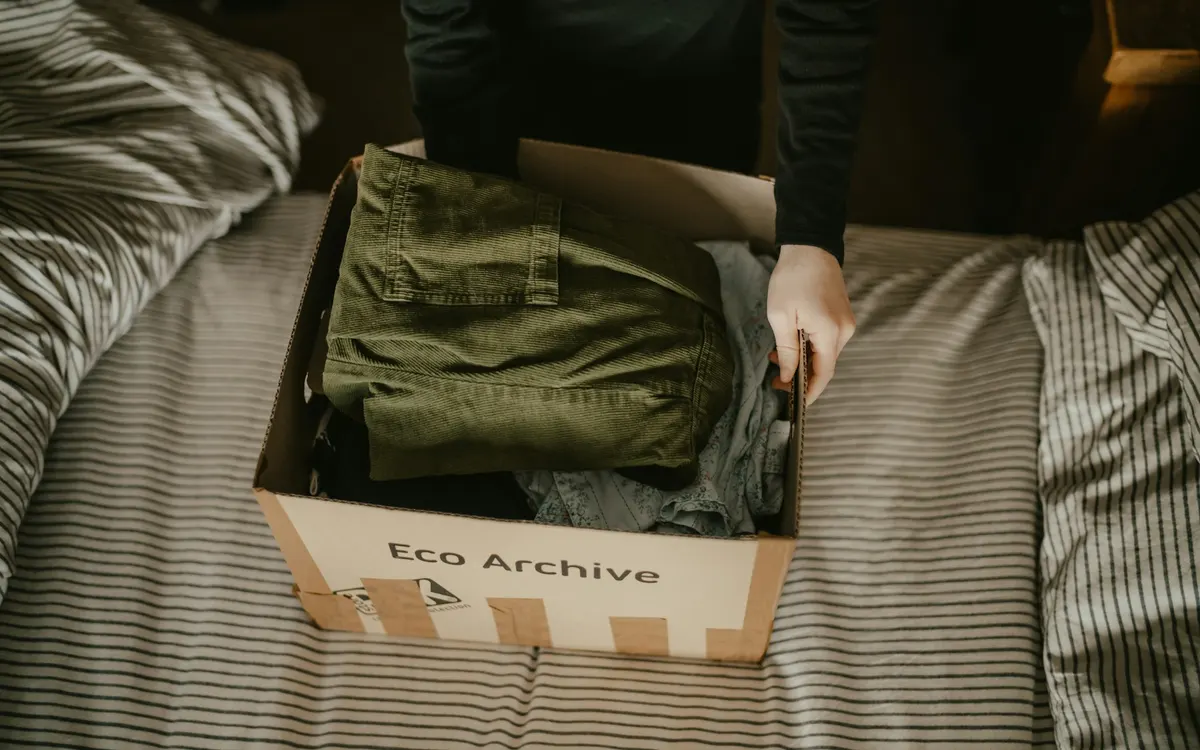
Sustainable decluttering prioritises prevention, reuse and correct disposal rather than moving unwanted volume elsewhere. Use what is already owned, repair when sensible, donate only suitable items and follow official routes for the rest. The most important change happens after the clear-out: slowing the purchases that recreate the same excess.
Reduce excess responsibly and use purchasing rules that stop the next accumulation cycle.
Set the right priorities
- Prevent future inflow: Record the triggers and categories behind repeated unused purchases.
- Reuse with purpose: Match useful items to a recipient or organisation that actually wants them.
- Dispose correctly: Separate electrical, battery, textile, chemical and bulky-waste routes as locally required.
Put the method into action
- Use what already exists. Finish products and repair suitable items before replacing them.
- Choose the right exit. Prioritise reuse, donation and regulated recycling according to condition.
- Reduce rebound buying. Do not reward a decluttering session with new storage or décor.
- Record recurring mistakes. Notice the categories, offers or emotions that drive unused purchases.
What commonly goes wrong
- Treating any donation as automatically sustainable.
- Buying new containers as a reward for removing belongings.
- Driving repeatedly to sell low-value items without considering the total effort and impact.
A useful 30-minute test
Set a thirty-minute timer and work inside one visible boundary. Begin with prevent future inflow, apply the first two actions above and reserve the final five minutes to put back what stays. The session ends with a usable space and a named next step — never a larger unfinished pile.
What to check in the UK
Local authorities and retailer take-back schemes vary. Check current council and GOV.UK guidance for the item and postcode rather than relying on a national-looking list that may be out of date.
Maintenance without a marathon
Use a waiting period and a written need for non-essential purchases.
The test of success: Useful items reach a real next use, waste follows the correct route and the category’s future purchasing rule is written down.
Quick checklist
- Use what already exists
- Choose the right exit
- Reduce rebound buying
- Record recurring mistakes
How to correct the weak point
Return to the physical limit for this category and identify the failed action: access, capacity, location or a missing exit. Correct that constraint and run one short reset. The target remains concrete: useful items reach a real next use, waste follows the correct route and the category’s future purchasing rule is written down.
Frequently asked questions
Questions before you begin
Is donating always sustainable?
No. Items must be useful and accepted; otherwise donation can shift disposal work elsewhere.
How do I stop buying clutter again?
Track unused purchases, add a waiting period and check what you already own first.


