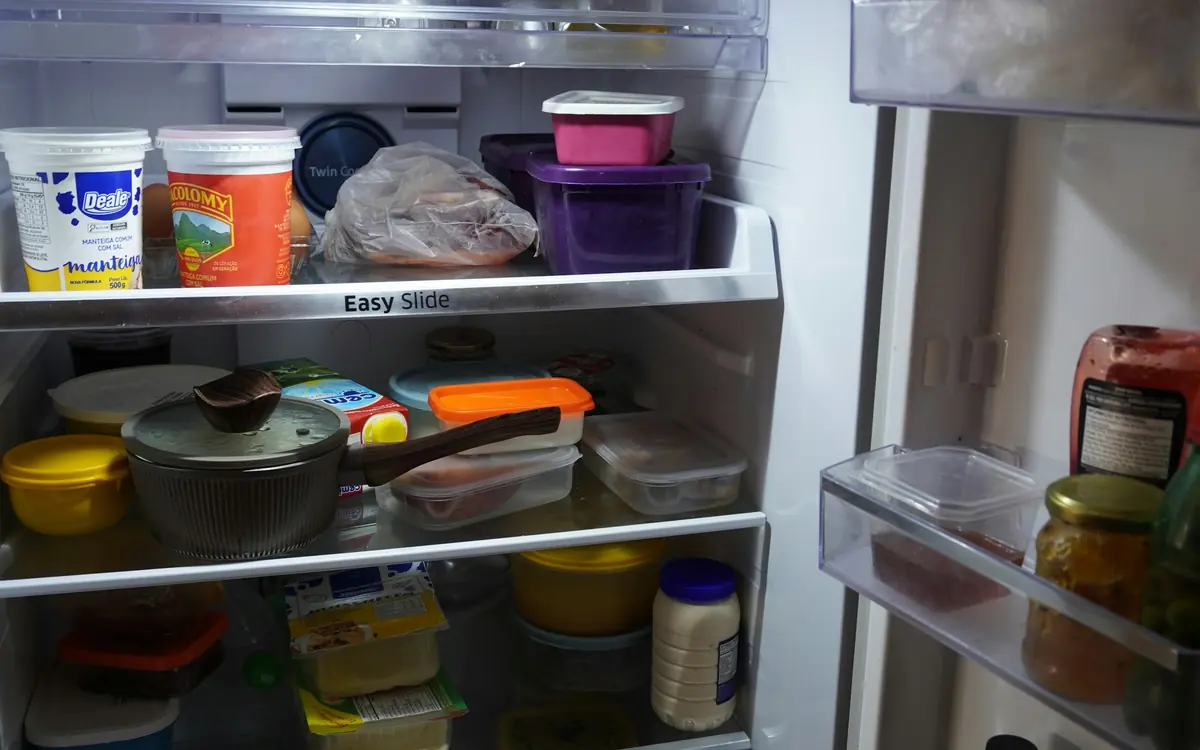
To organise a fridge, keep it at 5°C or below, avoid overfilling it and group food so short-dated items are visible. Use a thermometer rather than relying only on the dial, keep raw and ready-to-eat foods separated according to food-safety guidance and create one “eat first” zone to reduce waste.
Set up clear fridge zones, protect food safety and make shorter-dated items visible before the next shop.
Decisions that matter first
- Safe temperature: Check that the appliance holds 0–5°C and leave room for cold air to circulate.
- Contamination control: Follow packaging and official food-safety guidance for separating and covering raw and ready-to-eat foods.
- Date visibility: Put opened and shorter-dated food at the front and review it before shopping.
A practical sequence
- Check the temperature. Use a fridge thermometer and aim for 5°C or below, following FSA guidance.
- Clear and clean safely. Work in short sections so chilled food stays out for the shortest practical time.
- Separate food categories. Follow packaging and official guidance for raw, cooked and ready-to-eat foods.
- Create an eat-first zone. Move opened and shorter-dated food to one visible shelf or container.
A safer way to use the available shelves
- Eat-first area: Use one visible container or shelf for opened and shorter-dated food without hiding the labels.
- Ready-to-eat group: Keep prepared foods covered and separated according to official guidance and their packaging.
- Raw-food control: Store raw products exactly as safety guidance and the appliance manual require, preventing leaks and cross-contamination.
- Door storage: Use the door only for products suited to its temperature variation; follow labels and the fridge manual.
Mistakes that create more work
- Overfilling shelves so air cannot circulate properly.
- Using decorative containers that hide dates or leak.
- Assuming every model has the same coldest zones without checking its manual.
Your first contained reset
Set a thirty-minute timer and work inside one visible boundary. Begin with safe temperature, apply the first two actions above and reserve the final five minutes to put back what stays. The session ends with a usable space and a named next step — never a larger unfinished pile.
UK-specific checks
The Food Standards Agency recommends a fridge temperature of 5°C or below and advises against overfilling. Appliance designs vary, so combine official food guidance with the manufacturer’s storage instructions.
How to keep it working
Review dates and leftovers before writing the shopping list, then wipe spills as soon as they occur.
The test of success: The temperature is verified, food categories are safely separated and the next items to use are visible without a full shelf search.
Quick checklist
- Check the temperature
- Clear and clean safely
- Separate food categories
- Create an eat-first zone
If the system starts to fail
Return to the physical limit for this category and identify the failed action: access, capacity, location or a missing exit. Correct that constraint and run one short reset. The target remains concrete: the temperature is verified, food categories are safely separated and the next items to use are visible without a full shelf search.
Sources and references
Frequently asked questions
Questions before you begin
What temperature should a fridge be?
The Food Standards Agency recommends 5°C or below; use a thermometer because the appliance dial may not show the actual temperature.
Where is the coldest part of a fridge?
It varies by appliance, so check the manual rather than relying on a universal shelf diagram.


