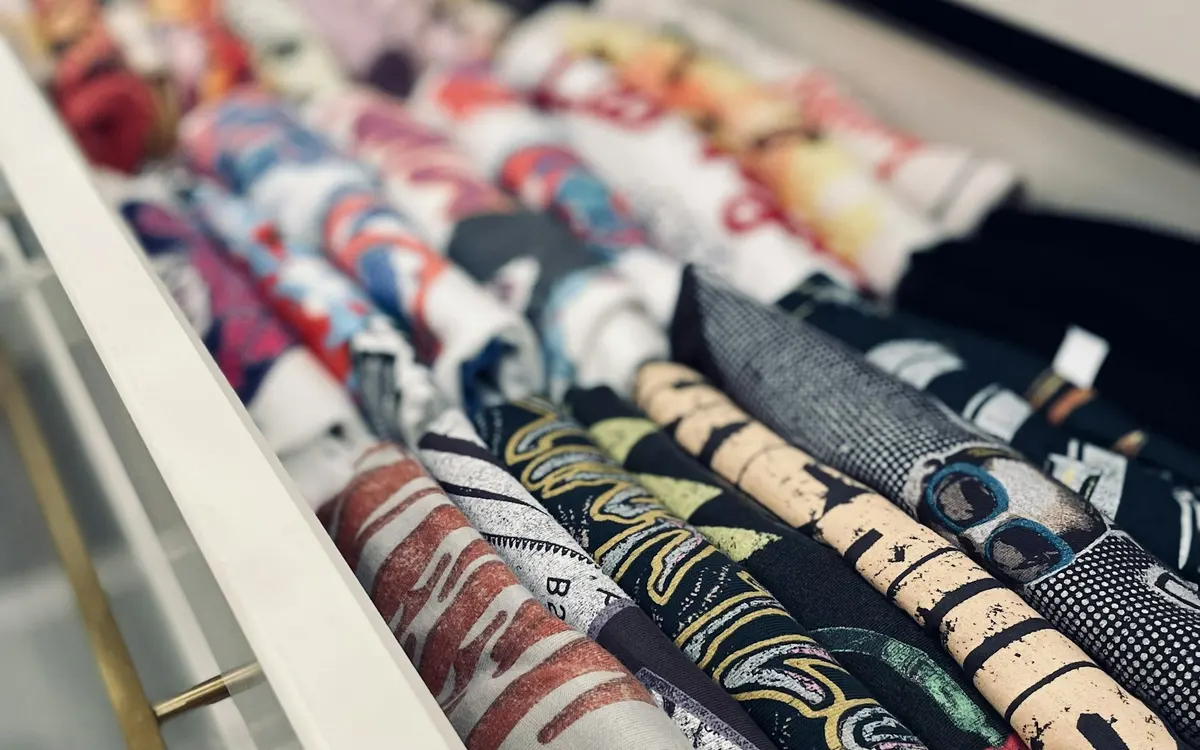
Marie Kondo folding turns a garment into a stable rectangle that can stand vertically in a drawer. Fold the sides inward, reduce the height to the drawer depth and test the finished piece. The aim is visibility and easy access, not maximum compression or an identical fold for every fabric.
A simple vertical-folding tutorial for T-shirts, trousers, underwear and more visible drawers.
Set the right priorities
- Protect the fabric: Smooth rather than stretch, and avoid forcing structured or delicate garments into a compact shape.
- Match drawer depth: Use the furniture as the final measurement so the folded piece stands without catching.
- Create readable rows: File items front to back by type, with enough space to lift one piece cleanly.
Put the method into action
- Create a rectangle. Fold sleeves and irregular edges inward to form a stable shape.
- Reduce the height. Fold the long rectangle into thirds or the depth of the drawer.
- Test whether it stands. Adjust the final fold until the piece supports itself.
- File pieces vertically. Arrange them front to back without over-compressing the drawer.
What commonly goes wrong
- Copying a fold without adapting it to the drawer dimensions.
- Compressing knitwear or elasticated fabrics too tightly.
- Spending so long on perfect folds that clean laundry never reaches the drawer.
A useful 30-minute test
Set a thirty-minute timer and work inside one visible boundary. Begin with protect the fabric, apply the first two actions above and reserve the final five minutes to put back what stays. The session ends with a usable space and a named next step — never a larger unfinished pile.
What to check in the UK
Thick jumpers and mixed seasonal layers may need separate shelves or looser folds. Vertical filing is most effective for T-shirts, underwear, nightwear and other stable, frequently used pieces.
Maintenance without a marathon
Fold near the place where clean laundry is sorted and leave a little room for normal variation.
The test of success: Every item is visible, the drawer opens freely and removing one garment does not disturb the rest.
Quick checklist
- Create a rectangle
- Reduce the height
- Test whether it stands
- File pieces vertically
How to correct the weak point
Return to the physical limit for this category and identify the failed action: access, capacity, location or a missing exit. Correct that constraint and run one short reset. The target remains concrete: every item is visible, the drawer opens freely and removing one garment does not disturb the rest.
Frequently asked questions
Questions before you begin
Does vertical folding save space?
It often improves visibility and can use drawer depth well, but the main benefit is easier access.
Can every garment be folded this way?
No. Very bulky, delicate or highly structured items may be better hung or stacked.


